Thursday, 28 March 2019

How to Read a Nutrition Label

Reading food labels can be tricky.

Today, more than ever before, the general public is health conscious and scrutinizing the food they purchase.

Food manufacturers and marketers know this.

So you come across a snack that says “light” or “multigrain,” and you assume the product in it is healthy.

Why would they lie?

There’s nothing worse than finding out your favorite protein bar is actually just a sugar filled candy bar with deceiving packaging.

That’s why today we are dedicating an article to seeing through this deceptive marketing.

We’ll do this by showing you how to read a nutrition information panel, as well as what packaging claims you can dismiss as bogus.

We’ll also give you some tips on shifting your diet to a more healthy way of eating in general.

If you are trying to watch what you eat to lose weight, make sure you grab our healthy eating guide: 10 Levels to Change Your Life.

It’s a level up system, with each step shifting you towards improved nutrition strategies. We take it slow and work with your own pace, so the changes you make will be sustainable and permanent.

You can download our 10-Level Nutrition Guide when you sign up in the box right here:

IGNORE THE FRONT OF THE PACKAGE

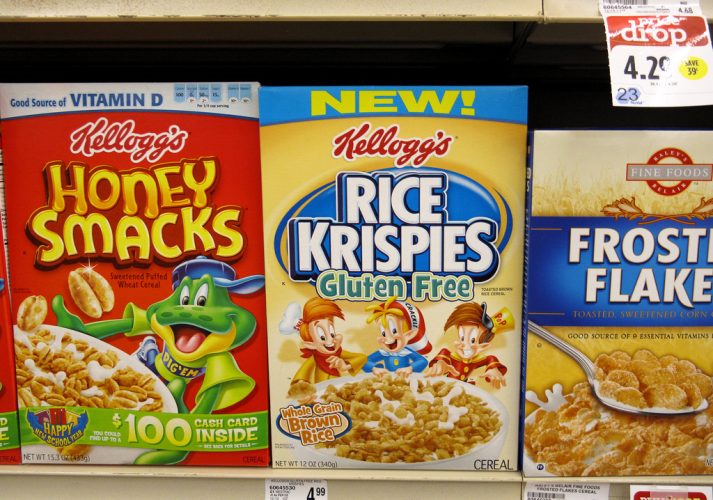
Food manufacturers are not required to place any nutritional information on the front of the package.

Because of this lack of regulation, what’s included on the front of the package is what the manufacturers want you to see.

In other words, sales propaganda.

Let’s take a look:
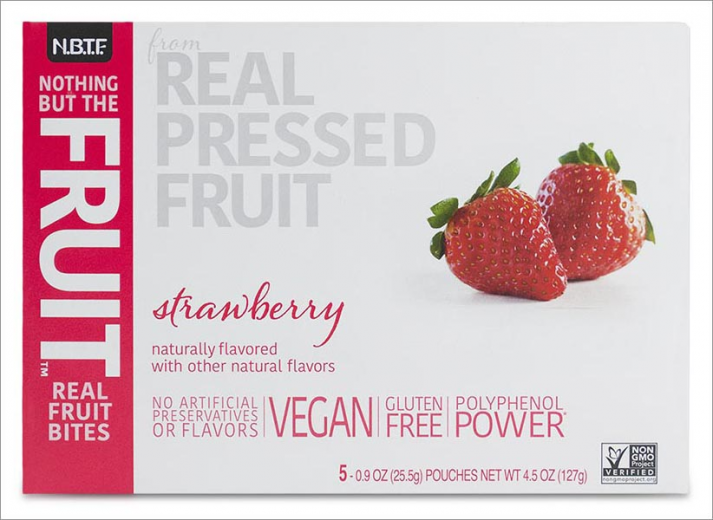
“Real Fruit Bites” is the product and the company is Nothing But The Fruit.

From the looks of this, I would assume these “bites” are mostly made of strawberry? Because what else would you put in them?

The verdict: the number one ingredient in this is “apple puree concentrate.”

I’ll devote an entire section to bogus health terms marketers use to fool us shortly. I bring up the front of the package now, to tell you it’s not where the real info is.

If you want to know exactly what you are eating, you need to look at the Nutrition Label and Ingredients List.

That’s where food marketers have to tell the truth (sort of).

WHERE THE REAL HEALTH CLAIMS OF A FOOD LABEL CAN BE READ
In the United States, the Food and Drug Administration (FDA) requires most packaged food to include a label.

Many other countries around the world have a similar agency regulating food.

This is key for us nerds because organizations like the FDA force companies to disclose exactly what’s in the food they’re selling.

They do this with a Nutrition Label and an Ingredients List.

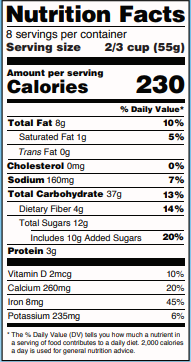
A Nutrition Label identifies the nutrients found in a portion of food, like calories, protein, and vitamins. It’ll look like something like this:
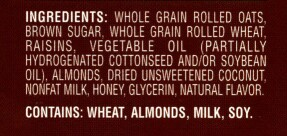
An Ingredients list tells you what they placed into the product to get those nutrients.

It might look like this:
Both are important to analyze.

You want to know how many calories you’re getting out of your meal, which can be found in the Nutrition Label.

You also want to know what foods they are using to make up those calories, which can be found in the Ingredients List.

HOW DO I READ A NUTRITION LABEL

Let’s look at another Nutrition Label:
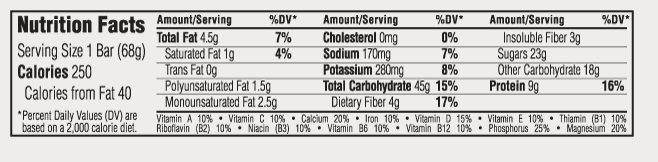
This is taken from a Spiced Pumpkin Pie Cliff Bar.

Let’s analyze:

Serving Size. This is somewhat self-explanatory: serving size is the amount of food, by volume or weight, that is considered one “serving.” New FDA regulations require this size should be typically what someone would eat in a single serving. Which matches what we see here, with “1 Bar.”

However, double check this. Your serving might not match what the manufacturer has in mind. For example, a bag of Doritos has about 10 servings in it.

Do you really only eat a tenth of bag of Doritos at a time? Look at the Nutrition Label.

Calories. This is the energy you’ll get from food.[1]

This will be one of the most critical pieces of information on the food package. Which is why it’s right under the serving size on the label.

Going back to our Cliff Bar example, we can see that one bar is roughly 250 calories.

I want to talk about that word “roughly.” The FDA allows a 20% leeway in either direction for food manufacturers. That means, legally, that Cliff Bar might have 200 calories…or 300 calories.

%DV. Have you ever wondered what that “%DV” stands for? It means “Daily Value” and the percent will range from 0 to 100.

%DV is an estimate of how much of a particular nutrient you are eating with one serving of food. For example, if you ate that Spice Pumpkin Pie protein bar, you would be getting around 8% of the potassium required for a healthy diet.

However, we need to explain come caveats: it’s based on a 2,000 calorie a day diet, whereas the average person needs more than this (calculate your calorie needs here).

Also, this is the FDA’s estimate of how many vitamins and minerals you need. Do you really trust Big Brother? Use %DV as a starting point only.

Here’s some rough guidelines:

Less than 5% DV isn’t that much.

More than 20% DV is a lot.

You’ll notice that some things, like Trans Fat, Protein, and Sugar don’t have %DV. The FDA doesn’t require this information, so most food sellers don’t include them.

Don’t overlook the Nutrition Label. Yes, they are estimates. But an estimate of the number of calories in a meal is better than no estimate, especially if your goal is weight loss.

A message I really strike home in our “Why Can’t I Lose Weight?” article is having a good estimate of calories in and calories out. While there is plenty of nuisance, weight loss really does come down to calories eaten and expended.

That’s why reading the Nutrition Label can be so critical –  it helps you with the first part of this equation.

If you have no idea how many calories you need to eat in a day to reach your goals, I have a couple of resources for you.

The first is our article “How Many Calories Should I Eat Every Day? It includes a calculator to give you an estimate of your individual calorie requirements, plus tips on what to do with this info.

And the second is for people who are looking for more specific, guided accountability, our uber-popular 1-on-1 Coaching Program. We take all the guesswork out of a weight loss plan and help you start to make better food choices.

We’ll tell you exactly what you need to do to get in shape, by changing your nutrition strategy, creating an exercise program, and offering personal accountability. Many Rebels have turned their lives around by becoming a client, and we’d be happy to talk with you to see if we could be a good fit for each other.

Click on the big image below to learn more:

WHAT NUTRIENTS DO I WANT MORE OF? WHAT NUTRIENTS DO I WANT LESS OF?

Let’s chat quicky about some of the nutrients identified on the label.

We’ll first talk about dietary fat: the good, the bad, and the ugly.

The terms “saturated” or “unsaturated” refers to the bonding of hydrogen atoms to carbon atoms in a fat molecule. When every carbon molecule is bound to the maximum number of hydrogen atoms, the fat is “saturated.” If some carbon molecules are double-bonded to each other (and bonded to fewer hydrogen atoms), the fat is “unsaturated.”

Let’s chat about why this matters.

The good: unsaturated fat. This is the “healthy” type of fat. There are two types, monounsaturated and polyunsaturated (don’t worry too much about the difference, it has to do with the number of carbon double-bonds in the molecule). Unsaturated fat is typically liquid at room temperature, and you find it in plant-based products (like nuts, avocados, coconut, etc). When people talk about “healthy fats,” unsaturated is generally what they are referring to.

What about saturated fat? There’s a lot of conflicting studies out there on saturated fat, and it’s been vilified by marketing companies for years. So what’s the truth?  Personally, I believe that saturated fat is an important nutrient that we need in our system. You can check out this article for an interesting debate on the subject.[2]

The bad: trans fat. There has been a good deal of hype about trans fat in recent years.  So what’s the deal? Trans fat is technically an unsaturated fat, but the fat molecule has a different type of carbon double-bond that gets created when oil is “partially hydrogenated.” Hydrogenation is a process used in food production to increase shelf life, which is why it’s often found in processed food like frozen pizza and doughnuts. Why does all this matter? The “trans” type double bond causes the fat to behave differently in the body, and NOT in a good way. Trans fat can contribute to atherosclerosis, which could lead to a heart attack. Keep your intake of trans fat as low as possible.[3]

It should also be noted, that if food has less than 0.5g of trans fat per serving, the FDA allows food manufacturers to round down – meaning “0.” So even if the packaging says “Zero Trans Fat,” it might actually still have some.[4]

We’ll end this article by talking about ways to avoid this concern, by sticking to “real food.”

Cholesterol is the next big player on the list. Cholesterol is an important building block in cell membranes. We get some from food, and some is made in our liver. Cholesterol is mainly found in animal products, just like saturated fat. In my opinion, cholesterol is not the villain it’s made out to be!

Sodium, and often Potassium, are also listed in this part of the Nutrition Facts label. These are electrolytes. Should you avoid sodium, because of a possible increase in blood pressure? Eh, the findings on this are mixed.[5] A little bit of salt on your food (or in your food) should be fine.

Carbohydrates include simple carbs (sugars, like glucose, fructose, dextrose) and complex carbs (fiber and polysaccharides).

Dietary fiber is great stuff! There are two types: Soluble fiber is digestible and gets absorbed by your body. This type of fiber helps keep your blood sugar levels stable.

Insoluble fiber is not digestible, so it stays in your GI tract and helps “keep things moving.” Trust me, this is a good thing.

Prioritize fiber in the foods you eat.

Sugar is a simple carbohydrate. It can be absorbed by your gut very quickly because it doesn’t need to be broken down by enzymes first. Sugar is not necessarily bad for you, but consuming large amounts of sugar can cause your blood sugar levels to become unstable.

Other Carbohydrates generally refers to complex (large) carbohydrates in food, such as starch. These large molecules are broken down by enzymes into sugar, but the process takes a while. Complex carbohydrates keep your blood sugar levels more stable than do simple carbohydrates.

Protein is one of the main building blocks for muscle and other body tissues. There is normally not a %DV for protein because the amount of protein that each person needs is quite variable. You can check out this article for an idea of how much protein you should be eating.

At the bottom of the Nutrition Label, you’ll also see a breakdown of micronutrients.

Let’s go over some of these key players:

Calcium: needed to build bones. This is especially important for women, because bone mass decreases after menopause, so build your bones strong while you are young!

Vitamin D: needed to aid the absorption of calcium. Some of this comes from food, and some is made by your body when you are exposed to sunlight.

Iron: needed to make hemoglobin, the oxygen-carrying substance in blood cells. Women are more at-risk for being iron deficient, while men are more at-risk for being iron overloaded.

You may notice that some labels list more micronutrients than others. If a micronutrient is missing from a label, that means there is not any of it in the food product.

Let’s look at the Nutrition Facts for a can of soda.
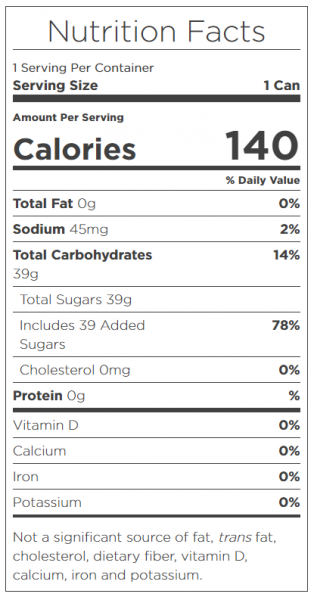
See any micronutrients on there? That’s why soda is referred to as “empty calories.”

HOW DO I READ AN INGREDIENTS LIST?

Let’s take another look at our Cliff Bar, but this time, looking at the Ingredients List:

All the ingredients are listed in order of quantity by weight, so the first few ingredients make up most of the product.

For example, the Spice Pumpkin Pie Cliff Bar is mostly brown rice syrup (sugar), oats, and cane syrup (more sugar), in that order. The 4th ingredient, “soy protein isolate” is where this protein bar starts to get some of its protein.

I know. Perhaps “Carbohydrate Bar” would be more appropriate than “Protein Bar.”

The first few ingredients will give you an idea of what you’re actually eating. So this Cliff Bar is sugar, oats, and protein from soy.

Pay attention to the ingredients list. This tells you exactly what you’re eating.

Because again, the front of the package can’t be trusted.

BOGUS CLAIMS ON FOOD LABELS TO WATCH OUT FOR

Marketers love the front of food packages.

It’s where they get to use all their fun terms that sound healthy.

Let’s go over some:

“Light.” When you see “light” or “lite” on a package, it means it’s been processed to reduce calories or fat. However, when fat is reduced sugar is often increased to compensate. Check the ingredients list to find out for sure.

“Made with whole grains.” What does “made” mean? It means it contains “some.” Check the ingredients list to see just how much. Is a whole grain in the top three? If not, it’s mostly not whole grains.

“Natural.” This has to be good right? Natural, i.e nature, means good for you?

Eh, it just means that at some point, the ingredients came from a natural source like apples. Going back to our example above, you could argue that the protein bar contained “natural” ingredients because brown rice syrup is derived from rice.

However, a protein bar doesn’t resemble anything grown from a plant. And brown rice syrup really doesn’t have much in common with actual brown rice.

For the most part, the more ingredients on a list, the less natural it is.

“No added sugar.” This sounds good, until you realize that some foods like dried fruit are just naturally high in sugar. Double check the ingredients to find out.

Want some other clever food labels to be on the lookout for? We have a whole article right here diving into the subject.

FOOD WITHOUT LABELS

Want to know how to avoid worrying about Nutrition Labels and Ingredients Lists?

Stick to the outer rim of your grocery store.

You’ll find a lot of the following there:

  • Meat
  • Eggs
  • Fish
  • Nuts
  • Vegetables
  • Fruits

Do you know what most of this doesn’t have? Food labels.

A banana won’t have manufacturer disclosed information, because no one manufactured it.

It’s a banana.

It’s what we here at Nerd Fitness call “real food.”

We discuss this in great detail in our Healthy Eating Guide.

Food that grew in the ground, on a tree, ran on the land, swam in the sea or flew through the air, would fall into this category.  Meat, fish, eggs, vegetables, fruits, nuts are all great examples of REAL food.

Most of this food is found on the outer rim of the grocery store. And there aren’t too many food labels here, besides a barcode.

If you want to start eating better, buy whole foods that don’t have food labels on them. They’ll generally have more nutrients and fewer calories, which is an ideal recipe for weight loss.

Then you don’t have to worry about food manufacturers deceiving or trying to hide ingredients.

The banana is a banana.

However, while eating “real food” is a key component of a successful weight loss strategy, it can still be useful to have an idea on the amount of calories in foods such as bananas.

Calories in and calories out is the central component of weight loss (thermodynamics for ya), so having a rough idea of calories you’re consuming is key. Even in “real food.”

Maybe one day we’ll get robot vision to analyze the calories in everything we look at.
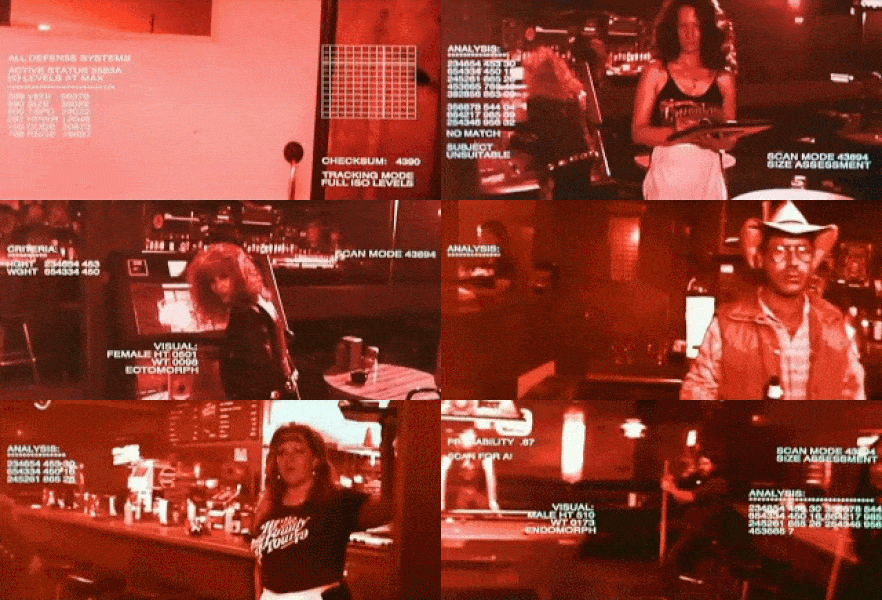
For now, you can Google ‘[food] + calories” or check MyFitnessPal to educate yourself!

Alright, I think that about does it for today’s article on reading a Nutrition Label.

Did I miss anything?

Do you have any tips or tricks on deciphering a Nutrition Label or Ingredients List?

Do you have any other examples of foods that claim to be one thing, but whose ingredient list proves it’s another?

Let me know in the comments!

-Steve

PS: If you’re reading a Nutrition Label to try and lose weight, you’re on the right track! As we state in our Rules of the Rebellion, “You can’t outrun your fork!” Keep at it and keep asking questions!

PPS: If you want more 1-on-1 help to lose weight or shift your nutrition strategy, I’ll again remind you of our Online Coaching Program! We work with busy people just like you to develop and execute plans to level up their lives! Click right here to learn if we are a good fit for each other.

###

All photo sources can be read right here.[6]


source https://www.nerdfitness.com/blog/how-to-read-a-nutrition-label-part-1/

Tuesday, 26 March 2019

3 Reasons to NOT Step On the Scale Today

I bet you weighed yourself this morning.

Did you like the number you saw, or were you expecting something lower?

Did you get overly excited if it was low or unreasonably depressed if it was too high?

We’ve all been there, so don’t beat yourself up too much.

Seriously, quit hitting yourself!

Whenever somebody tells me that he or she is going to get in shape, it’s always something like: “I’m going to lose 50 pounds,” or “If I can just get down to 200, I’ll be good.”

I’m here to tell you that you should reconsider stepping on that scale anytime soon.

Why?

Because although picking an arbitrary number for weight loss is a decent starting point (and it’s definitely good to set goals), your scale certainly doesn’t tell the whole story and can send you on an unnecessary roller coaster of emotions.

Yes I do realize most roller coasters are amazing – the emotional ones kind of suck though.

Today we explain why the scale is only one piece of the puzzle.

A quick note before we jump in: I bet you’re reading this because you’re struggling to get the scale to move in the direction you want. Believe it or not, 90% of the equation is your diet! 

I know how tough it can be to stick with a nutritional plan, and that most people abandon a diet after a few weeks! Plus, dieting stinks. We took this into account and created a 10-Level system that allows you to slowly change your diet to get in shape the right way, and change your physique permanently. Pick a level, follow the instructions, level up when you’re ready. Done!

Grab our free NF Diet strategy guide when you sign up in the box below, and then keep reading this article about why scales suck!

1) Your weight will fluctuate more than the stock market

The human body is one incredibly complex piece of machinery. There are things going in, coming out, transforming, and dissolving all of the time. As a result, your weight can fluctuate wildly over the course of a 24-48 hour period, by up to five to six pounds.[1]

Let’s chat about some variables that can change by the hour:

What did you eat or drink today? All food and water have weight to them. An eight-ounce glass of water will add weight to you, because it itself has some weight (half a pound). Even eating a salad will affect your weight, since vegetables are heavier than air.

How much sodium did you have today? Consuming salt will make you retain water.[2] The more water you are holding, the more you will weigh.

Did you eat any carbs today? Speaking of water weight, eating carbohydrates can make you hold onto water.[3] Refined carbohydrates in particular, like bread and pasta, cause a high insulin response. When insulin is high, you hold onto more sodium, meaning more water.[4] Which is why people often lose a lot of water weight when following a low-carb or ketogenic diet.

Additionally, carbohydrates are stored in your muscles as glycogen. What’s attached with the glycogen? More water.

What time of the month is it? Following along on our trend of water weight, a menstrual cycle will also cause water retention, meaning more overall weight.

Have you, ah, been hitting up the bathroom today? I’ll just say it: urine and feces weigh something. You do the math.

When did you work out last? Exercising will cause you to sweat, which means less water. But you’ll also likely drink more water in response, which will have an impact on the scale too.

If you’re trying to lose weight the healthy way (a pound a week is a good goal to shoot for), your successful weight loss could be hidden by any number of circumstances that falsify your statistics.

That means you could be down three pounds since last week, but because you ate Chinese food last night (oh hey sodium), drank water this morning, and didn’t get to weigh yourself til the afternoon (while wearing jeans), the scale could show a GAIN of one pound. After working so hard, this “weight gain” can instantly demoralize you, sending you to the kitchen for some pity rocky-road ice cream and then over to the couch for a Game of Thrones marathon.

It’s just a number, and it can vary widely over a short period of time.

2) Your weight does NOT tell the whole story

The scale alone often won’t demonstrate fitness progress.

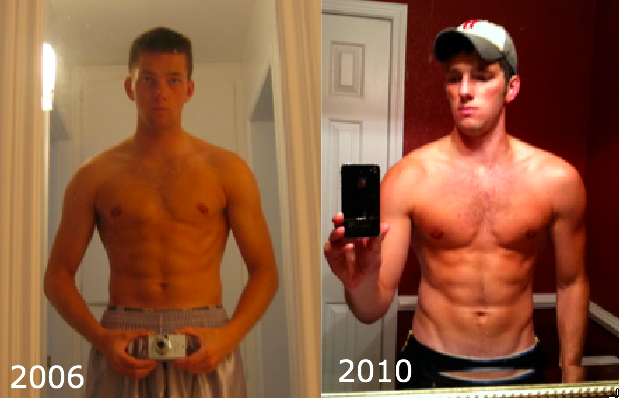
I have two pictures from my past to as an example, taken about four years apart.

Want to know something crazy?  I weighed the EXACT SAME AMOUNT in both pictures.

While my body weight in the two photos may be identical, it’s clear to see I packed on more muscle for the photo on the right.

What’s going on?

Let’s discuss a couple changes the scale might not be capturing:

Yes, it’s true that muscle weighs more than fat. Although if you want to be technical about it, a pound of muscle weighs the same as a pound of fat. That’s what “pounds” mean. However, a pound of fat takes up about twice the space as a pound of muscle, since muscle is about twice as dense as fat. That’s why people typically lean out as they drop their body fat percentage.

Strength training will increase bone density. On average, bones make up about 15% of body weight. And strength training will increase bone density, meaning they’ll weigh more.[5] After some time strength training, your bones might literally drive the scale up.

That’s why – although I weighed the same – I likely had more muscle, denser bones, and less body fat over the four year period.

All good things in my book.[6]

3) The scale does not define you

If you set out to lose 100 pounds in a year – an incredibly ambitious goal – and you only manage to lose 85, you might consider yourself a failure. After all, you set a goal and failed to achieve it, right?

YOU STILL LOST 85 freaking pounds, something you might have been struggling to do for years. I bet you’ve had to buy a whole new wardrobe and get all kinds of “holy crap you’ve lost a lot of weight!” comments.

Not bad for a failure, huh?

Don’t get caught up in the numbers game, and instead be proud of what you have accomplished instead.

I had a friend who wanted to get down to 199 pounds badly. He went from 235 pounds down to 202 pounds, and got stuck there for weeks. I remember trying to get him out of his funk: he saw himself as a failure for not losing those three pounds, when in reality he had lost 30+ pounds, completely redesigned his body and his diet, and was in better shape than he had been in years.

You’re not a statistic.

You’re not a number.

If you’re reading this, it means you’re part of the Rebellion.

I want you to know that if you’re like my friend, frustrated by missing your goal, you’re not alone.

We constantly receive emails from Rebels, letting us know they are struggling to hit their fitness goals. It’s actually the reason we decided to create our 1-on-1 Online Coaching Program, so we could offer specific guidance tailored to their individual needs.

Here’s how it works: we get to learn your goals, lifestyle, challenges, and situation: Kids? An old injury? A job that requires travel? All the above? We got you covered.

We’ll then pair you with a coach from Team Nerd Fitness that fits your personality and situation. They’ll work with you to build custom workouts and nutrition guidance to meet any goal you might have. Unless that goal is ruthless world domination. Use your powers for good, okay?

Want to see if we are a good fit for each other? Click on the button below to schedule a free call. We’d love to talk to you, no matter what!

How to keep track of your success instead

I will admit that the scale can have its uses. If you’re just getting started, a few big changes in the first few weeks can really help you see progress and build momentum.

Also, over long periods of time, it’s a good way to tell if you’re headed in the right direction or not.

However, a scale can also cause all kinds of mental issues that bring you down quickly, and becomes less and less important as you get closer to your goals.

Here’s how you can stay strong and motivated without stepping on a scale regularly:

Remember that your journey to a healthier life is a marathon, not a sprint. Changes from day to day are practically meaningless and incredibly difficult to quantify, so go with changes over a longer period of time. Weigh yourself once a month or every other week to make sure you’re trending in the right direction. If it’s weekly, make sure you weigh yourself at the same time of the day, wearing the same type of clothing. Remove as many of the variables as possible to make your reading accurate. And even then, don’t put too much stock into it.

Look at your body composition rather than your weight. I try to take a picture of myself every month or so, giving me the chance to compare how I look.  You can also buy a body fat caliper (I use this one) or tape measure to keep track how your body is adjusting. Just make sure you’re taking your measurements in the same places on your body at the same time of day. If you’re taking photos, take a straight-on photo and a profile photo.

Set goals that are not weight-oriented. Say you want to do 15 push-ups, run a half marathon, and/or do a pull-up. With your mind focused on a strength building or endurance goal, you won’t have to worry so much about a dumb scale. If you can only do 5 push ups now but next month you can do 15, you definitely got stronger, but you probably also lost some fat.

Keep a journal. I know plenty of 170-pound people who are out of shape and 250-pound folks who are incredibly healthy. How do you FEEL this month compared to last month? Maybe you can now run around the track without stopping, you don’t get winded going up and down stairs, and you can give your kids a piggy back ride without being out of commission for days afterward. Keep track of your energy levels, your conditioning, and your overall well-being. Screw the scale.

If you’re interested in other ways to track your fitness progress, I’d encourage you to check out our post “How to Properly Track Your Progress.” We cover the tips above, plus much more.

As the saying goes, “You have to track the problem to crack the problem.” Make sure you look into ways of tracking besides a single scale.

What say you?

Are you a scale junkie?

I’m a recovering one. However, over the years I’ve learned my overall health, strength, and happiness are far better indicators of how I’m doing.

Moral of the story – if the scale is working for you and you’re seeing results, stick with it. If that number on the scale constantly screws with your mind, maybe it’s time to take a break.

So how about you?

Have you had success with stepping a scale daily? Had some rough weeks because of what the scale said? How about skipping the scale entirely and seeing great results?

Let’s hear some scale-related stories from the Rebellion!

-Steve

PS: Ready to change your physique the right way? Want to have an actual plan to follow? Grab our NF Diet Strategy Guide and our Strength Training 101: Everything You Need to Know free when you join the Rebellion and sign up in the box below:

###

All photo sources can be found right here.[7]


source https://www.nerdfitness.com/blog/3-reasons-to-reconsider-stepping-on-the-scale-this-morning/

Tuesday, 19 March 2019

Five reason you’re not losing weight

Weight issues can be a source of stress for many people however despite our best intentions, sometimes we struggle to see results because of other factors in our lives besides our diet and activity levels.

While food and exercise (of course) play an important role in an individals ability to lose weight, there are severeal other factors which also play a role including lifestyle and hormone levels.

Most people appreciate that creating an energy deficit is essential to weight loss, however making sure an individual is not excessively exercising or making severe restrictions to their diet is important as these factors can result in immense physiological (physical) or psychological (mental) stress. Physiological and psychological stress can ultimately have detrimental effects on any weight loss attempt due to a disruption in your delicate hormone balance.

With that in mind, here are the top reasons why an individual may struggle to lose weight.

You are overtraining

There’s no doubt that the fitness world has been going crazy about HIIT (High intensity interval training) as it‘s a quick and effective way to fit a workout into your day. Unfortunately some people have been taking their intensity training too far and as a result may experience adverse affects, such as weight gain, inability to lose weight, bloating and stomach issues to name a few.

While you should be moving your body in some way every day, it’s important to vary your training routine and allow your body to rest. Each person will have an individual threshold for what constitutes overtraining so it is a matter of listening to your body and also assessing your own results and energy levels. Too much exercise can lead to injuries, exhaustion and hormonal imbalance.

You are Not Eating Enough Protein

Protein is an extremely important macronutrient when it comes to losing weight and building or maintaining lean muscle mass. Protein plays an essential role in gaining muscle mass, which is important as muscle is the metabolic powerhouse because the more muscle we have, the faster our metabolism is.

Eating the right amount of protein, in the correct distribution can actually boost your metabolism, and reduce your cravings and desire to snack. For optimal protein distribution, aim to have a good source of quality protein at each meal and snack.

A diet rich in protein can help prevent catabolism or metabolic slowdown, which is a common side effect of losing weight. Studies have also shown that those who eat a high protein breakfast often have fewer cravings throughout the day.

You’re Not Eating the Right Food

The quality of your overall diet is super important. You should aim to eat as many wholefoods, in particular plant based foods, which can improve your health and regulate your appetite. It can also help to reduce inflammation by consuming a diet rich in fibre, anti-oxidants, phytcohermicals and probitioc rich foods.

You should be aiming to reduce your intake of artificial ingredients including sweetened beverages and foods high in refined sugar (think lollies, cakes and biscuits, for starters) which are going to have a negative impact on insulin and cortisol levels.  Aim to eat foods in their most natural state as much as possible.

Also try to avoid restricting your calories to excess as that can cause inflammation and raise cortisol by depreivation and putting stress on the body.

Instead nourish your body with a diet that is high in vegetables, lean proteins, slow release grains and healthy fats.  Also eat foods that are high in fibre to help you manage your sugar levels, keep your appetite at bay and balance you hormones.

High Cortisol Levels

The stress hormone ‘cortisol’ has been getting a lot of attention this year and for good reason.

While it’s natural to have a bit of cortisol in your system (it is the fight or flight response after all), excessively high amounts of can cause some issues including irritability, depression, weight gain and more.

Cortisol is secreted by the adrenal glands as a response to stress however having elevated cortisol levels for an extended period of time disrupts the bodies blood glucose control by stimulating glucose secretion from stores in the liver and limiting the release of the hormone responsible for removing excess glucose from the blood stream, insulin. This results in high blood sugar levels.

Eventually, more insulin is secreted to remove the excess glucose once cortisol levels have dropped, but this cycle results in poor glucose control which also makes losing weight very difficult as the excess glucose can be stored as fat.  Therefore, managing cortisol and insulin levels are both important when trying to lose weight

Recently there has been some interest in a new ingredient called Bluenesse, which is a lemon balm extract (Melissa officinalis). Preliminary research has indicated that Bluenesse may help provide beneficial physiological effects for mental health while simultaneously having calming and improved alertness effects.

To date there have been two pilot studies in humans which have shown promising results for the use of Bluenesse in maintaining and improving mental focus while reducing the effects of physiological stress.

The first pilot study showed Bluenesse is absorbed within 60 minutes and participants reported beneficial effects 1 hour after intake. The second study contained a larger cohort and also had some promising results. In this Study, stress was induced by a multi­tasking ac­tivity. Participants also consumed a beverage and a fruit bar which contained 300 mg and 600 mg of the lemon balm extract. Study results demonstrated intake of 300 mg lem­on balm extract per day showed the strongest effects. One hour after consumption beneficial effects could be seen relating to improvements in alertness, working mem­ory and word recall, as well as a reduction of cortisol levels which we know is elevated during periods of stress. While research is only in its infancy and it is still an emerging area, the preliminary research is promising and indicates Bluenesse may aid in reducing stress-induced cortisol levels and may also support mental focus and cognitive function.

You are not getting enough sleep

In the words of Arianna Huffington, ‘Sleep your way to the top’.

Many of us are busy, overscheduled and stressed and as a result they may forgo sleep.

When the body is not under stress, cortisol levels are naturally increased upon wakening and decreased at night. When the body is under stress, cortisol levels can be low across the day, and elevated at night. Getting adequate sleep and regulating your sleep cycle is an important strategy in managing your cortisol levels.


By Jessica Spendlove from Health and Performance Collective

Check out more herehttps://healthandperformancecollective.com/ and follow her on instagram here 

The post Five reason you’re not losing weight appeared first on Fitness In The City.


source http://fitnessinthecity.com.au/move/fitness-move/five-reason-youre-not-losing-weight

Thursday, 14 March 2019

Losing weight: Top 5 beginner’s mistakes

Despite the widespread awareness of obesity and the health complications associated with it, there is still a great deal of misinformation out there about the best way to lose weight. Over the decades, there have been countless ‘fad’ diets and workout regimes that have exploited people’s desperation to shed the kilos in a short amount of time.

The fitness and weight loss industry has exploded over the last decade with everyone rushing to buy their way to a healthier lifestyle. This has resulted in many products and services that are marketed as a healthy alternative but are actually far more likely to hinder your weight loss efforts.

On the whole, losing weight is about consuming fewer kilojoules than you burn throughout the day. There are many factors that can affect this process, most notably the hormones affecting your metabolism.

Contrary to popular belief, intense physical exercise only has a minor effect on weight loss when compared with a dramatic change in diet.

Let’s take a look at the top 5 mistakes people trying to lose weight tend to make.

1.     Fooled by ‘healthy’ snacks

For many people struggling to lose weight, snacking is one of the chief culprits behind their predicament. It can be incredibly hard to avoid snacking when there are so many sugary, bite-sized things surrounding us, especially when we’re out of the house.

Many people have, instead of cutting out snacking, opted to switch to so-called ‘healthy’ snacks like protein balls and muesli bars. While these options are obviously healthier than a caramel chocolate bar, they can still be quite high in sugar.

Rather than snacking, it’s better to simply eat larger but healthier meals at key times throughout the day. If you’re short on time and want something quick, there are plenty of simple and delicious meals you can cook in less than 30 minutes.

2.     Believing that ‘natural sweeteners’ are healthier

Recently, the negatives of sugar and high-sugar diets have caused people to look for alternative sweeteners. Many have made the switch to ‘natural sweeteners’ such as honey, believing them to be nutritionally healthier than traditional white sugar.

However, this is not the case. Adding honey to your porridge rather than regular sugar only changes the taste and nothing else. When it comes to kilojoules, there’s no difference between a natural sweetener and a processed one.

Sugar can be one of the hardest things to give up when losing weight. Like anything addictive, you can wean your way off sugar by slowly using less and less of it in your morning coffee or by switching to low-sugar alternatives.

3.     It isn’t healthy just because it has fruit in it

This may seem obvious, but a lot of people allow themselves to be tricked by the presence of fruit in otherwise unhealthy dishes. For example, strawberry and banana are great on their own, but when you add them to a cake all the good they do for you is overpowered by the added sugar.

Fruit drinks are also something you need to be careful around as the top brands will usually only have a small percentage of actual fruit in them along with a heap of added sugar. Smoothies are also a danger as they will often be combined with high-sugar yoghurt or ice-cream to give them their consistency.

Fruit is great for your body, but only when it’s consumed without unhealthy accompaniments. Don’t let yourself fall into the trap of thinking that an image of fruit on the packaging makes it a healthier option.

4.     Failing to limit alcohol consumption

When it comes to changing diet, a lot of people conveniently forget to think about their alcohol consumption. While it might not be fun to limit the amount of drinks you have on a night out, have you thought about the nutritional impact those drinks are having on your body?

There is a surprisingly high level of kilojoules in alcoholic beverages and most of us will tend to exceed the recommended two standard drinks. If drinking is a weekly occurrence for you, you may want to re-think your lifestyle habits if you want to take your weight loss journey seriously.

5.     Thinking that every salad is automatically healthy

Putting ‘salad’ in the title of a dish is a great way to lure in those seeking a healthy alternative. Unfortunately, many salads are deceptive in the amount of added kilojoules they have, especially when it comes to dressings used.

As with anything else, make sure you scrutinise the nutritional information of any salad before you start eating it.

The biggest mistake people make when it comes to losing weight is when they don’t understand the basic science behind how weight loss works. Without proper knowledge of what it takes to actually lose weight and adopt a healthy lifestyle, people are very easily lured off the path they have set for themselves.

Hopefully by acknowledging and avoiding the mistakes listed above you can enjoy better success with your weight loss efforts.

The post Losing weight: Top 5 beginner’s mistakes appeared first on Fitness In The City.


source http://fitnessinthecity.com.au/health-nutrition/losing-weight-top-5-beginners-mistakes

Wednesday, 13 March 2019

The 20-Minute Hotel Workout

If your hotel doesn’t have a gym, is your training routine doomed?

Should you just turn on HBO and get back to exercising when you’re home?

Not so fast! If you have 20 minutes, and a cozy hotel room, you can still get a great workout in!

I have a simple routine that I use when I’m stuck in a hotel room, and you can try it too!

Let’s get your heart racing and roaring, and then you can get back to complimentary cable.

Also, if you’re prioritizing working out while traveling because you don’t want to lose momentum on your fitness journey, you’ve come to the right place!

We have tons of resources for you to check out. If your hotel does have a gym, we have a Strength Training 101 guide that will show you exactly how to use it. If your diet suffers when you’re traveling, our healthy eating guide will provide tips on what to keep in your mini-fridge. And if you want more exercises to do from your hotel room, our Beginner Bodyweight Workout will walk you through another full routine you can do from anywhere.

You can grab them, and our other free guides when you join the Rebellion below!

THE HOTEL ROOM WORKOUT

Whenever I create a workout, I always aim for a complete full body routine that will build muscle, burn fat, and also exercise your heart. 

And when I’m pressed for time, I do it in a circuit, so I can jump from one movement to the next.

I hit four types of exercises for my routines:

  • Legs – working both the front and back of your legs
  • Push – chest, shoulders, triceps
  • Pull – back, biceps, forearms
  • Core – abs and lower back

That means that you can work out almost every muscle in your body with just four exercises – simplicity for the win!

Always start with a warm-up (to get your core temperature up and muscles loose): 25 jumping jacks, 15 bodyweight squats, 10 push ups, 10 lunges (each leg), 10 hip raises, 25 jumping jacks. Do one exercise right after another – this should take you probably 3-4 minutes.

After that, move into your workout – set your watch/laptop for 15 minutes and then do as many full circuits as possible in that time frame, using PERFECT FORM for each repetition. I’ve split the workout into three levels – beginners should start at level 1 until they feel comfortable enough to advance to levels 2 and 3.

Do each exercise, one after another, without stopping if possible. If you need to stop between exercises or even in the middle of the set, go for it. Just remember you’re trying to complete as many circuits as possible within the 15 minutes without compromising your form. Advance to the more challenging exercises at your own pace, and if some exercises are too difficult or it’s too many reps, adjust them to fit your experience level – just make sure you are getting stronger and challenging yourself with each additional hotel stay. For example, if you can only do 5 incline push-ups…aim for six when doing the workout next time. So, here it is!

LEVEL 1

LEVEL 2

LEVEL 3

After your workout (you should be sweating like crazy if you did it right), ALWAYS remember to stretch

Here’s a cool down sequence you can try:

MORE WORKOUTS BUILT FOR HOTELS AND TRAVELLING

If you’re a road warrior and find yourself in hotels often, we have many resources here at Nerd Fitness to offer you.

If you enjoyed the Hotel Room Workout Circuit, it and others just like it can be found in our article “15 Free Circuit Training Routines: Build Strength and Stamina.”

If you like working out in unconventional places, like a hotel room, check it out! It’ll cover training in playgrounds, living rooms, or a gym (okay, that last one is 100% conventional).

Plus, there’s a circuit routine inspired by Batman.

You’re welcome.

The next resource I would toss your way is the article “How to Stay in Shape While Travelling.”

I took an epic quest of awesomeness for half a year, and while living out of a backpack, got in some of the best shape of my life. You can read all about it right here.

The last resource I will mention is our uber-popular 1-on-1 Online Coaching Program. Many of our clients travel quite a bit, and having an accountability partner that is available in any part of the world has been a game changer for many Rebels.

Are you trying to learn a new exercise, lose weight, or build muscle, but find doing it on the road a challenge? I’d love for you to click below and find out if we are a good fit for each other:

WHY YOU SHOULD WORK OUT IN YOUR HOTEL ROOM

Even when I’m living out of hotel rooms, I prioritize working out.

I find that on days when I exercise, I eat better. Something activates in my brain when exercising that says “I’m trying to be healthy, so I’m going to eat healthy.” On days when I don’t exercise at all, I tend to say things like “meh, I’ll do it tomorrow” or ‘it’s only one meal” or “it’s only a few beers.”

Not good, because as we continuously remind Rebels, diet is 80-90% of fitness equation.

That’s why a workout, even if it’s for only 20 minutes, can be very critical while traveling. It really does have a way of stopping you from gorging yourself silly on pizza later.

The next time you’re in a hotel room, or any room, try our 20-Minute Hotel Room Workout. If you find even Level 3 too easy, try this one instead. I’ll warn you though, I don’t hold back on this more advanced circuit.

Alright, now I want to hear from you:

Do you spend a lot of time in hotels?

Travel a lot for work?

What are your tips and tricks for staying healthy while living in hotels?

Let us know in the comments!

-Steve

PS: I mentioned above that what you eat will be responsible for 80-90% of your fitness journey. If you have no idea where to even begin on eating healthy, like a lost sheep with no shepherd, I encourage you to check out our 10-Level Nutrition Guide.

It’s designed for beginners, with easy simple progressions, each level getting a bit more challenging and healthier. You also progress at your own speed, to make sure your dietary changes stick!

You can download it for free by signing up to the Rebellion below:

###

All photo sources can be found right here.[1]


source https://www.nerdfitness.com/blog/the-20-minute-hotel-workout/