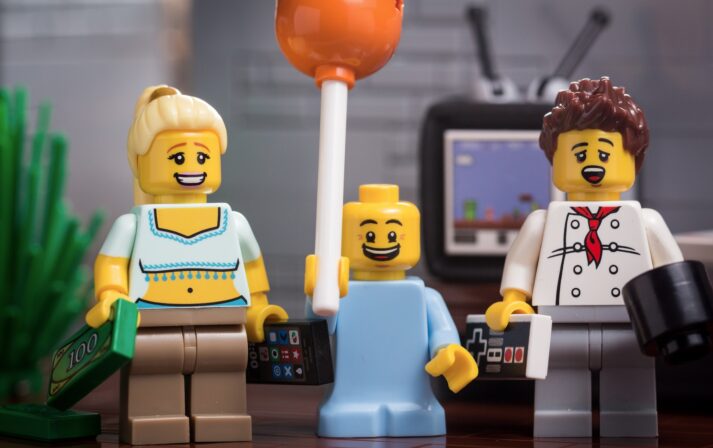
This is an article from Rebel Correspondent and Parenting and Mental Health Wizard, Dan.
Back in the early 90’s my older brother and I were playing Dragster on the Atari 2600 when our father walked in and looked over our shoulders for a minute. We expected the typical, “Alrighty boys, time to do something else,” but to our surprise, for the first time we got, “It’s my turn next.”
I remember him fumbling with the controller, blowing the Dragster’s engine several times, and explaining to us the best timing for gear changes.
The reason this sticks in my memory so clearly is because we were spending time together, learning and enjoying something different that we all loved.
Because home video games were so foreign to my father’s generation, gaming with your children was never seen as an acceptable pastime and way to spend with your kids.
However, those of us who grew up playing the Atari, NES and Genesis have come to see videogames, if facilitated properly, as another way to bring together generations and create some quality bonding time.
Like a lot of Rebels, I have always loved video games, and now that I’m a father to three, I’m beginning to see the wonderful benefits, along with the dangerous pitfalls, that gaming with my children has to offer.
Gaming and kids can be a controversial topic for parents – some are all for it, while others are dead against it. So today we’re going to weigh up benefits and problems on this issue, to help you make your own educated decisions with when it comes to your own kids, nephews and nieces, or any other children, be it now or in the future.
GOOD GAMING

If we believe what we’ve heard from the media since the release of Mortal Kombat (wow, was it really 1992?), video games are literally the worst thing ever for anyone under the age of 21. However, when we dig a little deeper, lots of actual research indicates that it may not all be gloom and DOOM (get it?).
Research has established that under the right circumstances, video games can be very beneficial to your child’s developmental, educational, social and emotional needs.
Now, whether it’s beneficial will depend on certain factors:
- how much time your child spends gaming
- what type of games your child plays
- why your child is playing games
- if they are playing alone or with someone
Developmentally, video games can improve your child’s:
- hand-eye coordination and fine motor skills
- problem-solving, strategy and planning, decision-making and logic skills
- ability to set and achieve goals and time management skills
Emotionally, video games may help them feel:
- less stressed – video games can be a way to manage mood or ‘let off steam’
- capable of doing something well – their self-esteem can grow as their skills as a gamer does
- connected to other people – particularly with online play (more about that later)
Socially, games may help a child:
- strengthen existing friendships and make new ones – both online and IRL
- learn to play fairly and take turns – (a concept my kids have yet to learn, unfortunately)
- feel closer to family and friends – especially when you all play games together.
Video games can have some educational benefits too. These include helping your child get better at:
- remembering things and critical thinking – I know the power of memory and video games personally; the Konami Code has been etched in my brain for decades
- recognizing and understanding visual information
- understanding concepts like mathematics, learning new words, navigation, and more.
All these things aside, the reason I, and many other parents, play video games with their children is because it’s an awesome bonding experience.
Researchers from Arizona State University explain,“Parents miss a huge opportunity when they walk away from playing video games with their kids….often parents don’t understand that many video games are meant to be shared and can teach young people about science, literacy and problem solving.
Gaming with their children also offers parents countless ways to insert their own ‘teaching moment’.”
Gaming with kids certainly has its benefits in terms of development and creating some special time between you and the kids. There’s nothing like multiplayer Mario Kart family nights, coaching your child through a level you learnt at their age, seeing their face light up as they conquer a difficult challenge, or just absolutely schooling them in NBA 2K, but there are certainly some downsides when it comes to mixing kids and gaming, so be sure to do so wisely.
BAD GAMING
Like anything, particularly with developing little minds and bodies, gaming should be done in moderation. Issues can certainly arise when kids are spending too much time in front of a screen and not enough time playing outside, getting some exercise, hanging with friends in real life, and just doing regular kid stuff.
We want our children to live their life, not a second life!
Along with the issues that come with inactivity playing video games too much can lead to:
- stress
- poor performance at school
- poor sleep or not enough sleep
- mental health problems
- and square eyes (according to my mum, an expert in this field who still calls a PS4 ‘The Sega’)
Excessive gaming can be detrimental to developing minds, and we all know how easy it is to get lost in a great game. Who else has ever said ‘I’ll just play for an hour’ and then suddenly it’s next Tuesday? So be sure to supervise younger children and keep tabs of how long older children are gaming.
To avoid this trap, it’s important is being able to provide your child with alternatives to gaming that they find stimulating and engaging that you can do together.
For starters, try:
- Board Games
- Live Action Role Play
- Sports – Take 2K to the driveway
- Explore the outdoors
- Catch up with families with similar aged children together
- Get active – Play, Swim, Jump, Chase, Hide, Seek. Just spend some time being a kid with your kid, you don’t need to overthink it.
Moderation and supervision are the ultimate tools needed here. I’m not going to try and answer the classic ‘how much should my X year old be playing games a week?’ question, because each child is totally different.
There are a range of (widely varying) guidelines available by ‘experts’ on the topic, but I’ve worked with children who play Minecraft for hours on end each day with zero impact on their development or wellbeing whatsoever, and also seen some children’s mental health and school grades deteriorate due to some very casual tablet gaming.
As a rule of thumb, if any aspect of your child’s wellbeing or regular routine is becoming disrupted as a result of gaming, start implementing strategies with them to address these behaviors.
This could be simply setting a gaming schedule or working on a contract together, disabling the wifi after a certain hour, or seeking professional help.
UGLY GAMING

Even as video game lovers and supporters, we can’t deny that there is a really dark side to gaming, and this force can be especially strong on our younger rebels.
As we gamers know, the media loves to talk about violence in video games. Although there are a lot of misconceptions about the role of violent video games and violence in general, I agree that violent video games are not appropriate for younger children. This is because at a young age, many kids find it hard to tell the difference between fantasy and real-life, and witnessing violent content can not only upset younger children, but impact on their perceptions towards violence in reality.

But for older children…it’s not so clear cut. Once again, our mates ‘The Experts’ can’t seem to all agree on whether violent video games lead to aggression in real life, but I think the vast majority of us who have played a violent video game aren’t planning on shooting up the neighborhood any time soon.
If you’re in doubt about whether a game may be appropriate for your child:
- Read some reviews – our favorite source is IGN.com
- Watch some Twitch or YouTube gameplay
- Even play the game yourself (Any excuse will do, right? After 87 hours of gameplay and selfless research, I have now concluded that Grand Theft Auto V is probably not suitable for my 3 and 5 year olds).
You know your child the best, so do your research and before calling the shots. As with every aspect of parenting, you’re not always going to make the right decision, but that’s all part of the fun (and also why I got to play Mortal Kombat at the age of 7).
If you’re having concerns about the types of games your child is playing, have a talk with them about it. Share your own values, and ask for theirs. Speak with them about how to properly deal with anger, respectful relationships with the opposite sex, and what they’re gaining from gaming.
By showing an interest in their gaming, you can keep a line of communication open, which can be vitally important throughout the adolescent years.
Online Gaming
In addition to violence, in recent years online game play has opened up a whole new can of worms with younger gamers.
As with any social situation bullying can happen online. (Feel free to join any Call of Duty match if you don’t believe me. According to my competitors, my mother has become quite fond of many 14-year old American boys).
Jokes aside, bullying is a real issue with many children and adolescents and if left unnoticed and not dealt with, in extreme circumstances, the consequences can be devastating. Our children can also be taken advantage of in online games via the world of microtransactions and shady game developers deliberately exploiting our children for cash.
I know parents who have installed “Free to Download and Play” children’s’ apps on their tablets, only to receive huge credit card bills the next month because they left their password saved on the device and their child had unknowingly been paying for DLC every few minutes of gameplay. So also be sure to protect yourself in these instances.
As with any online activities, when your child is gaming online, they are interacting with strangers. So ensure your child knows how to stay safe online, and knows they can speak to you about anything they see or hear without getting in trouble.
Finally, we get to the really ugly beast of Gaming Addiction. Games have always been enjoyable and rewarding, they provide us with clear goals, measures of success and achievement.
We as humans love this kind of stuff, but since the instant feedback nature of games works at such a faster time scale than our choices in real life, gaming can also contribute to players (particularly young players) developing addictions if they become the only ways in which a person experiences these rewards and achievements in their life.
Recognizing when the gaming has changed from a form of enjoyment way to meet some or all of these psychological needs is difficult, but if you feel that gaming may be impacting aspects of your child’s (or your) life, start by questioning why this is so and exploring what is missing from their life that is contributing to this.
Yes, there are pitfalls and a big dark side when it comes to mixing games and children, but if we educate ourselves and our children and communicate well, most of this can be counteracted with supervision and moderation.
For starters, try keeping all consoles or devices in a common area of the house. Not only will you be able to keep an eye on the game content and time spent gaming, but it will give you an opportunity to game and interact with each other.
START, PAUSE OR EXIT, IT’S UP TO YOU.
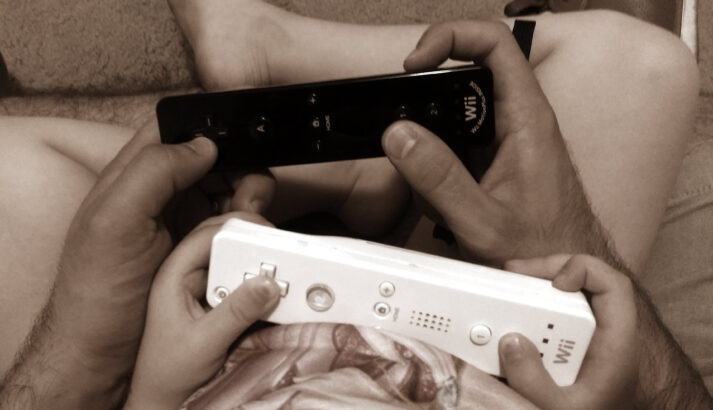
So there we have it: the good, the bad and the ugly.
Now it’s time for you to make your own decisions. Nobody knows your child better than you, and what works for one child may not always work for another.
Educate yourselves, try a few different approaches, know the risks and how to avoid these. Like a lot of aspects of raising kids, when it comes to video games, the healthiest approach is moderation.
Playing video games in moderation and balancing video games with other activities are the keys to avoiding most problems that can come with gaming.
Any parent quickly realises how little time their kids stay kids, so it’s vital to spend some special time with them doing things you both love. Whether that be gaming or something else, make sure your child is safe and enjoying themselves.
And as a parent to three younger rebels just starting to game, I want to hear from you:
Gaming with kids, yay or nay?
What games do you love playing with your children?
What alternatives to gaming work well for you?
What challenges have you found with kids gaming, and how did you work through it?
Did anyone actually get square eyes in the 90’s?
Let us know in the comments!
-Dan
photo credit: clement127: Sweet family, kid with controller, ps4 controller, greyscale xbox controller, Dan Schmidt.
###
source
https://www.nerdfitness.com/blog/a-nerds-guide-to-gaming-with-kids/


